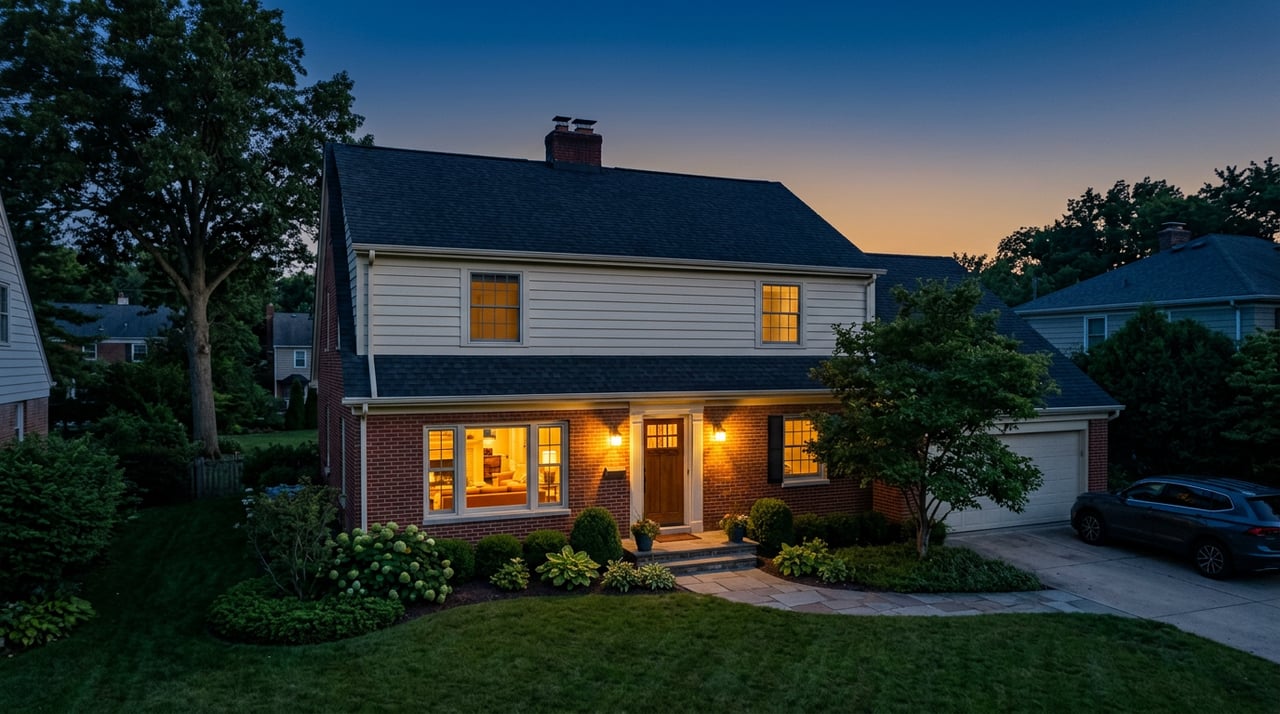
Lakeville MN Housing Moratorium 2026: Who Keeps Building?
September 24, 2026
September 24, 2026
On July 24, 2026, the Lakeville Planning Commission sat through a routine hearing on a 24-lot subdivision called Palmer Crossing, ten acres off 202nd Street where builder Nick Paling planned homes similar to what already lines the surrounding streets. A commissioner asked the obvious question: how is this getting approved when the city passed a one-year housing moratorium three months earlier? The answer, from city planning staff, was almost anticlimactic. Palmer Crossing's preliminary plat had been submitted before April 20, the date the council adopted the pause. That single detail, a paperwork timestamp, was the entire reason one more subdivision kept moving while others did not.
If you are comparing Lakeville to other south metro suburbs and you have seen headlines about the city freezing new housing, that Palmer Crossing hearing is the detail worth understanding before anything else. The moratorium is real. It is also far narrower than the word suggests, and the line it draws runs through calendar dates, not through neighborhoods, price points, or need.
On April 20, 2026, the Lakeville City Council voted 5-0 to pause the acceptance and approval of new residential plat, subdivision, rezoning, and comprehensive plan amendment applications for up to a year. The stated reason is planning bandwidth. City staff wants time to see how the Metropolitan Council's Imagine 2050 regional planning policies, and a package of state "Yes to Homes" zoning bills moving through the legislature, might require changes to Lakeville's own 2040 Comprehensive Plan before the city locks in more approvals under rules that could shift underneath it.
The ordinance carves out three groups that keep moving regardless: projects with preliminary plat approval already in hand, complete applications already submitted and accepted before the vote, and properties already in the Alternative Urban Areawide Review process. According to the city's own accounting, that leaves 675 single-family lots and 644 townhome units, 1,319 homes total, that are unaffected and will continue toward construction.
For context on what that number actually represents, Lakeville approved 523 additional residential units through final plats in 2025 alone, a year in which the city led the entire Twin Cities in residential building permits according to Housing First Minnesota. At that pace, 1,319 already-approved homes is not a thin trickle. It is roughly two and a half years of typical output, sitting in the pipeline and immune to the freeze.
Council Member Dan Wolter made that math explicit at the meeting: with enough projects approved for three years' worth of housing construction already in the system, he called the moratorium "a minor administrative change" rather than a supply shock.
| Category | Status under the moratorium |
|---|---|
| Projects with preliminary or final plat approval before April 20, 2026 | Proceeds. Building permits continue to be issued. |
| Complete applications submitted and accepted before April 20, 2026 | Proceeds, as with Palmer Crossing. |
| Properties already in Alternative Urban Areawide Review | Proceeds. |
| New plat, subdivision, or rezoning applications filed after April 20, 2026 | Paused for up to one year, or until updated rules are adopted. |
| Commercial and industrial development | Unaffected in either case. |
The Warwick property, a triangle-shaped parcel across from Antlers Park on County Road 50 where a developer had proposed townhomes and apartments, illustrates the other side of that line. The council had already signaled it was not enthusiastic about what had been presented there, and under the moratorium that proposal sits for at least a year while the city sorts out what it wants for that corridor instead.
If you have already started pricing homes in Lakeville, you may have noticed something odd: the median price you find depends heavily on which site you check and which week you check it. Reported medians for 2026 have ranged from roughly $450,000 to more than $560,000 depending on the source and whether it is measuring closed sales, active list prices, or a modeled home value index.
Part of that spread is just measurement methodology. But part of it is Lakeville's actual housing stock, which is split between two very different products sold under the same city name. On one side are established neighborhoods like Crystal Lake, Kenwood Trail, and Cherryview, generally 15 to 25 years old, priced off resale comps. On the other are still-building master-planned communities like Spirit of Brandtjen Farm and Avonlea, where builders are actively releasing new phases and pricing off construction cost, lot premiums, and current material pricing rather than what the house next door sold for five years ago.
The moratorium does not touch that second category. Spirit of Brandtjen Farm and Avonlea both have existing plat approvals predating April 20, so new sections there continue to release and sell exactly as they were before the vote. That matters for anyone assuming a moratorium headline means new-construction inventory is about to vanish. Near term, it will not. What it does mean is that no comparable next community is entering the pipeline behind them right now. The developments currently building are, for the moment, the last of their kind until the pause lifts or the city's comprehensive plan work concludes.
Public testimony before the council vote showed how differently people read the same pause. One resident argued the exemptions undercut the point of a moratorium entirely, telling the council that allowing already-submitted applications through created what she called a "rush-to-submit mentality" and risked "perceptions of favoritism or insider advantage."
Sunny Bowman, owner of Dakota County Lumber, testified from the builder side, warning that even a temporary pause would be "an irreparable blow" to small, family-owned construction companies and would push homeownership further out of reach for buyers already priced out of the city. Representatives from the St. Paul Area Association of Realtors made a similar case, arguing the freeze would constrain regional supply at a time the Twin Cities can least afford it.
Mayor Luke Hellier has pushed back on the idea that the pause changes much in the near term. He has pointed to more than a third of Lakeville's land still available for future development and framed the year as time to align growth with school and infrastructure capacity, not a step toward shutting growth down. That capacity question is not abstract. The Lakeville Area School District put a $139.6 million bond referendum in front of voters in May 2026 to expand and modernize three middle schools, on the heels of boundary changes in January that shifted where about 12 percent of elementary students attend class.
Neither side is wrong about what they are measuring. Hellier is right that the approved pipeline keeps construction moving in 2026 and into 2027. Bowman and the Realtor association are right that the pipeline is finite and nothing is being added to refill it while the freeze is active. Both things are true at once, which is exactly why the moratorium reads so differently depending on your time horizon.
If your search window is the next twelve months, the moratorium changes very little about what you will find. New construction in Spirit of Brandtjen Farm and Avonlea continues under existing approvals, resale inventory in older neighborhoods is unaffected, and the city itself noted that more than 100 homes were on the market in Lakeville at the time of the vote, spanning roughly $300,000 to well above that.
If your window is longer, the question worth asking about any new-construction listing is which phase or addition it belongs to and whether that plat predates April 20, 2026. A home in an already-approved section carries no real construction risk from the moratorium. A lot in a community that has not yet filed, or a project like the one proposed for the Warwick site, is subject to a pause that could run the full year or resolve sooner depending on how the city's 2050 Comprehensive Plan work and the state legislature's zoning bills shake out.
None of this changes the fundamentals that make Lakeville attractive to begin with. It does mean the easy assumption, that a booming suburb's new-construction supply simply keeps expanding indefinitely, does not hold for the next year in quite the way it has for the last several.
Does the moratorium affect homes currently listed for sale? No. It applies only to new plat, subdivision, and rezoning applications filed after April 20, 2026. Existing listings, whether resale or new construction in an already-approved development, are unaffected.
Could the pause end before a year is up? Yes. The ordinance allows the city to lift it early if updated planning rules are adopted sooner, tied to the 2050 Comprehensive Plan process and whatever the legislature decides on statewide zoning bills.
Should I expect prices to rise because of this? The moratorium's near-term effect on supply is limited, since 1,319 already-approved homes remain in the pipeline. Whether prices move has more to do with rates, seasonal demand, and the broader south metro market than with this specific ordinance, at least for now.
Comparing Lakeville against Eagan, Prior Lake, or Woodbury means comparing more than a median price pulled from a single site on a single day. It means understanding which numbers are locked in and which ones are still being decided at a council table. If you want a read on how a specific address or development fits into that picture, Kami Gerald can walk through what's actually approved, what's still pending, and what that means for your timeline. Let's Connect.
Stay up to date on the latest real estate trends.


Whether buying your dream home, selling a luxury property, or exploring Minnesota’s finest communities, Kami provides expert guidance and personalized service designed around your goals.

Kami Gerald
5018 France Ave S Edina, MN 55410 Mon–Tue, Fri–Sat: 6 AM – 10 PM Wed–Thu: 5 AM – 10 PM Sun: 6 AM – 9 PM